An Eclipse At Sea
/There was a time I wondered if I’d ever get to see one total solar eclipse. If I ever did, I reasoned, I’d have to pay a lot of money to travel around the world. Now I have seen three of them.
The first two were in the USA, and I had to travel no further than a brief domestic flight for either of them. In 2017, I stayed with friends in Dallas, Oregon, and in 2024 I stayed with friends just outside Dallas, Texas. Both experiences were remarkable, and all I hoped they would be.
This time, however, I’d be getting paid to see one.
The August 2026 eclipse swooped down around the coast of Greenland, where my work giving talks on ships often takes me. Its path curved through the Atlantic Ocean before crossing over Spain and ending during a sunset in the Mediterranean. Friends of mine would be on ships along much of its path, or observing on land in Spain. Astronauts I know would be giving talks on ships dotting its path. When I was offered a chance to be on a ship off the northern coast of Spain, I leapt on it.
The voyage would overlap with a preexisting assignment, leaving Baltimore on a different ship and heading to Greenland the week after the eclipse. I figured the planners would cancel the second voyage assignment. No, the company still wanted me to do it. I’d join the first ship in Dover, England, make scheduled stops in France and Guernsey, narrate the eclipse, then disembark and take four flights zig-zagging me from coastal Spain to the Washington, DC area, where I’d join the second ship.
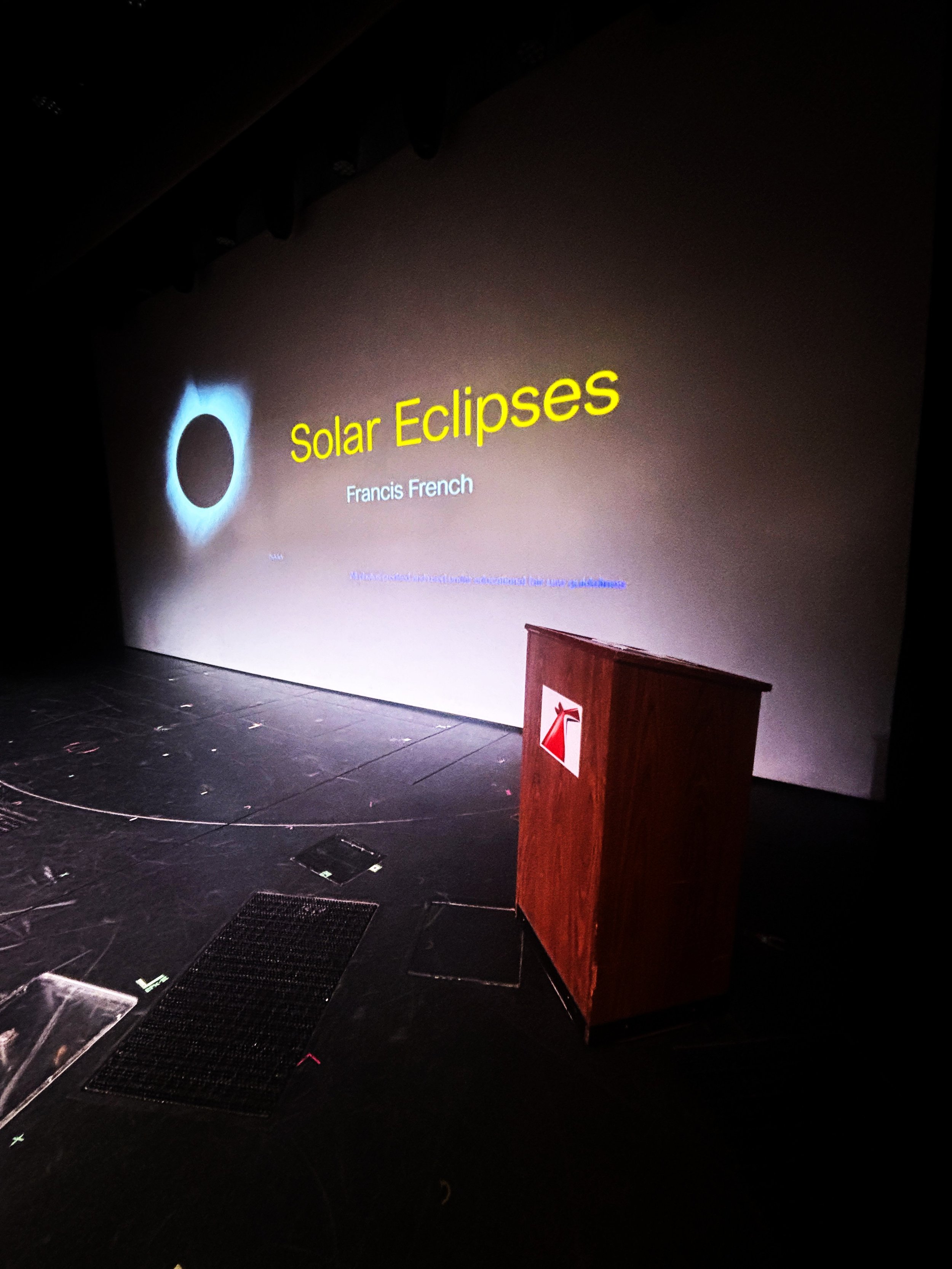
I put together a couple of new talks about the different types of eclipses, and what we might expect to see. Weather was always going to be a factor, and nothing could ever be guaranteed. A moving ship would be an advantage, but the path of totality was only 180 miles wide, and a ship can only move so fast if weather conditions deteriorated. Much of what we’d see would be down to luck.
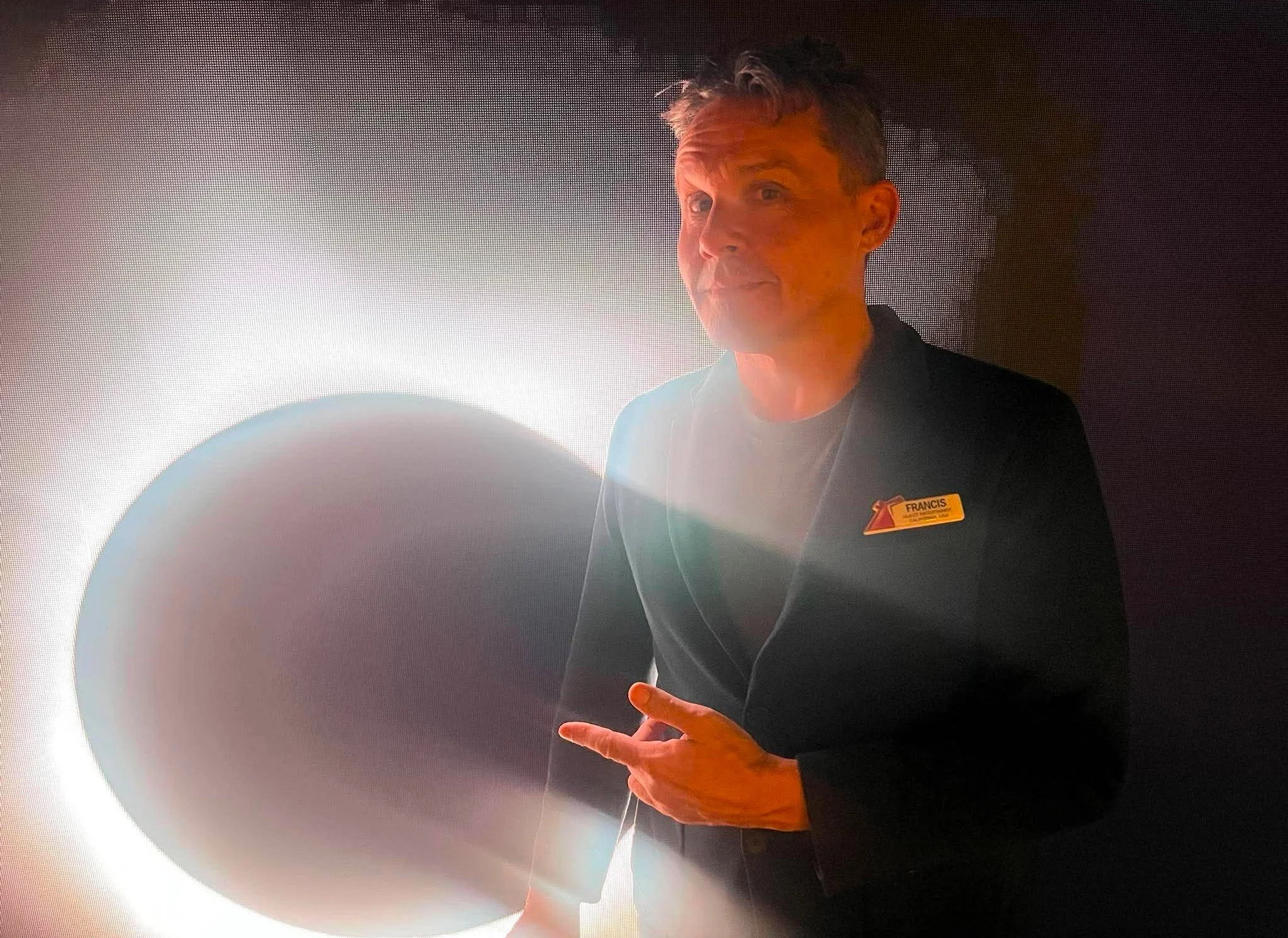
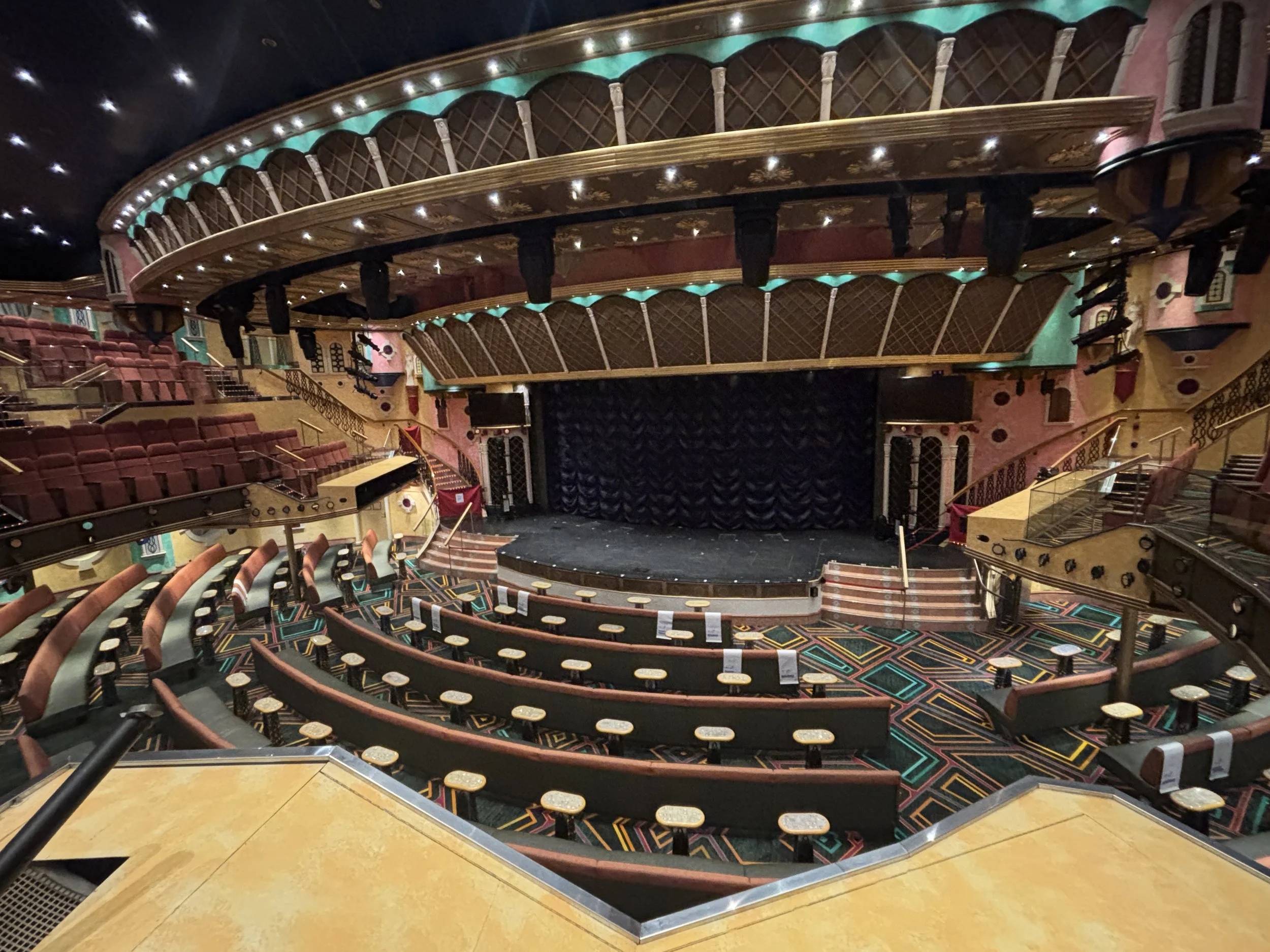
My talks were well-received, to put it mildly. With a 2000-person guest list, people were sitting on the floor and the edge of the stage the first time I gave a presentation — the standing room had all gone. Repeat presentations were quickly arranged. I focused my talks on safety with the eclipse glasses, along with the special things we might witness, if the clouds held off. I hoped we’d see the glimmer of Baily’s Beads as the last of the sunlight shot down the valleys of the moon before darkness. I described the thin crimson line of the chromosphere, the pink loops and spikes of prominences, and the majesty of the corona.
I was also able to talk with the captain and his crew about the best positioning so the maximum number of guests would get a great view. There’s a lot that happens with running a ship that is a priority over guest experience, but thankfully after some discussion we were able to take care of both.
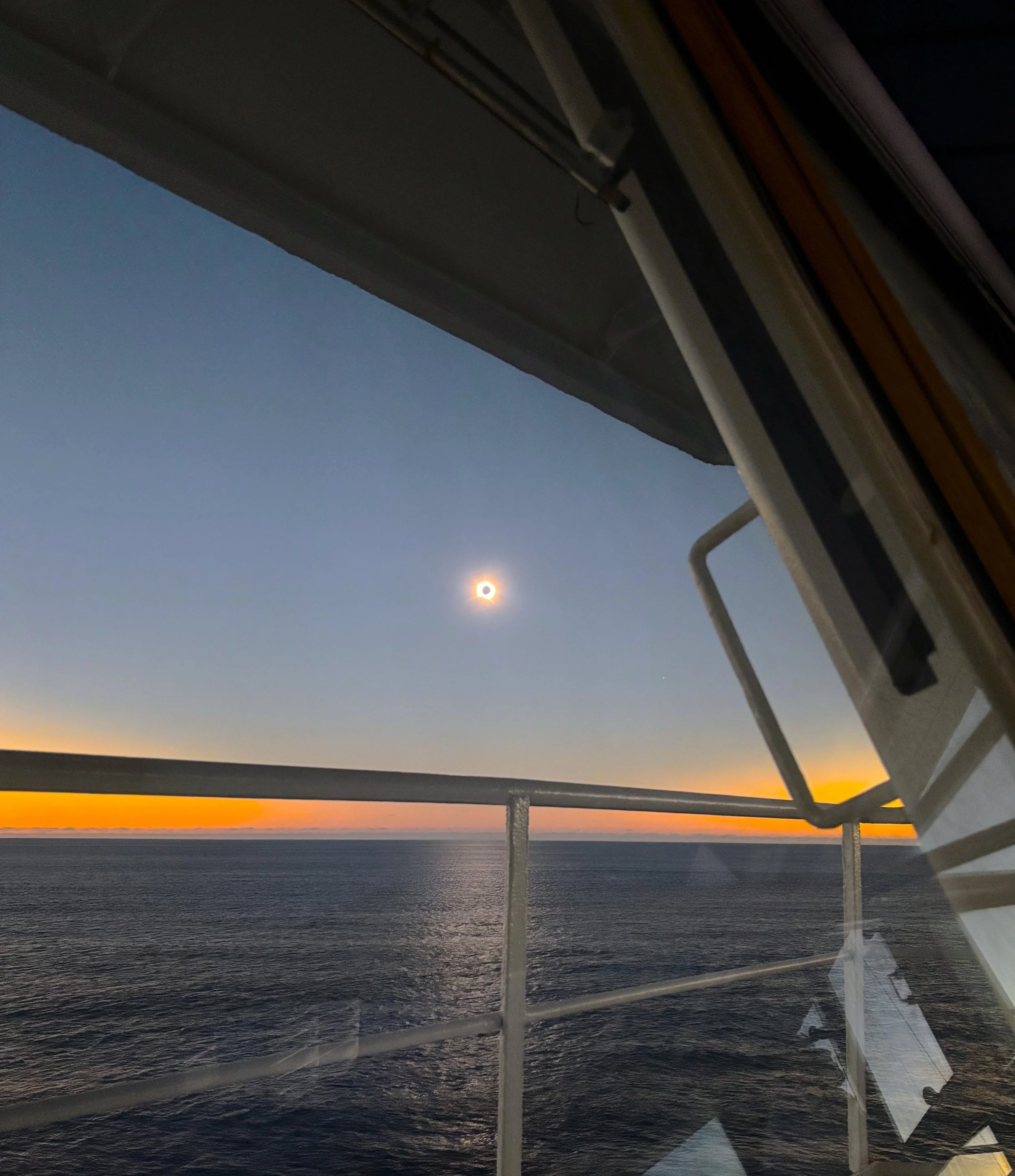
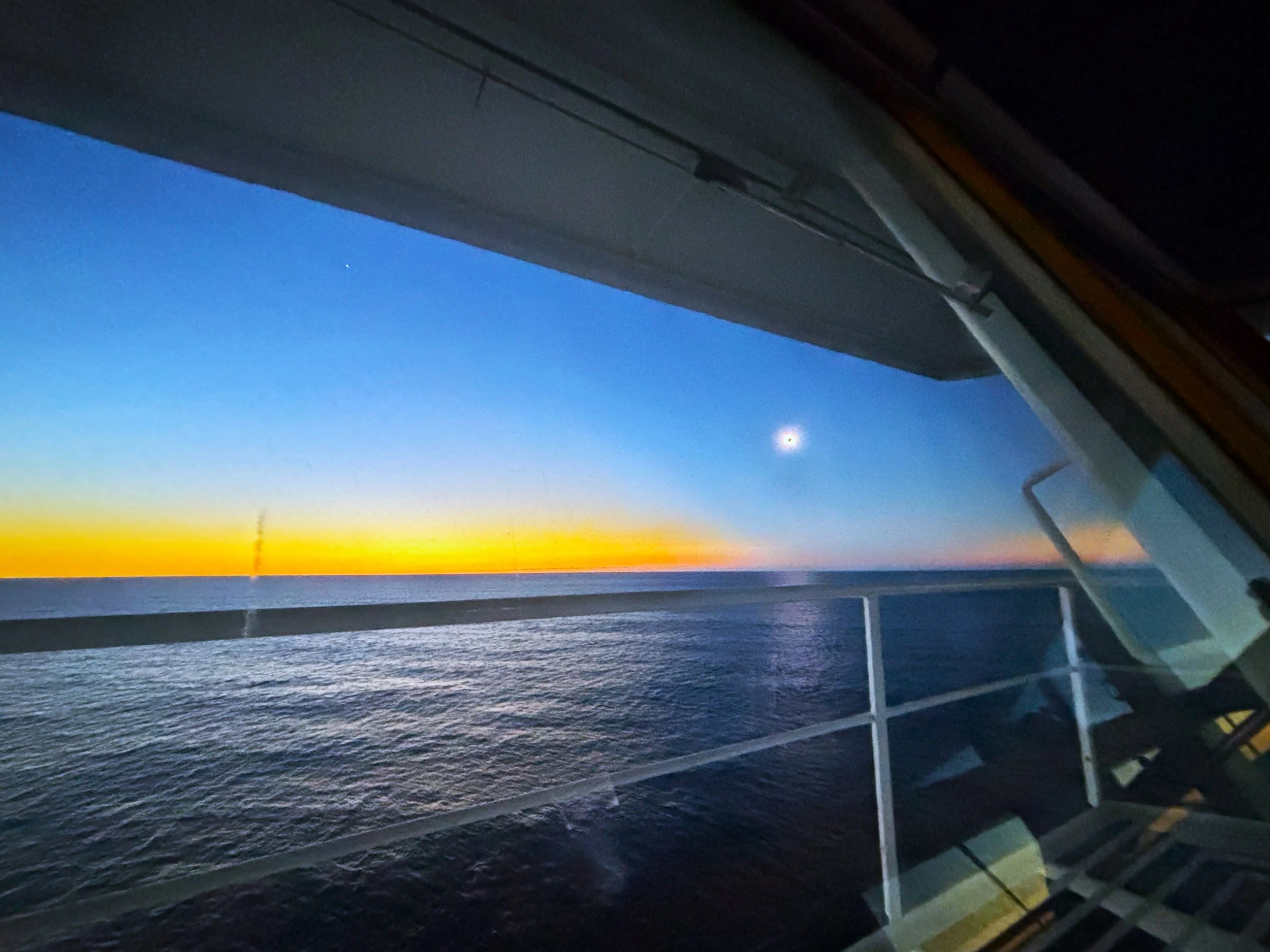
The day came. While clouds lingered over the coast of Spain, we were far enough out that there was not a cloud in our sky.
After giving one more presentation, I headed to the bridge, where the Italian crew made me one of the best espressos I’d had in a long time. The bridge is a quiet, focused place, and the crew eased us broadside to the sun. The enormous ship could maintain its position with just the tiniest nudge of the hand controllers. “Softly, softly,” as the Captain instructed his crew. I’d be narrating the sights as we swept into the moon’s shadow.
I couldn’t see them unless I stood on the far edges of the bridge, but I was aware that thousands of people, guests and crew, were behind me and listening to me explain what we were witnessing as the moon gradually swallowed the sun. In the minute before totality, having gone over all we might see, I told the crowds that I was going to stop speaking, and let them simply experience. I could only imagine what they were experiencing. And then, to my surprise, I was able to hear them.
A huge cheer vibrated though the ship’s hull as totality began and we were swept up by the darkness.
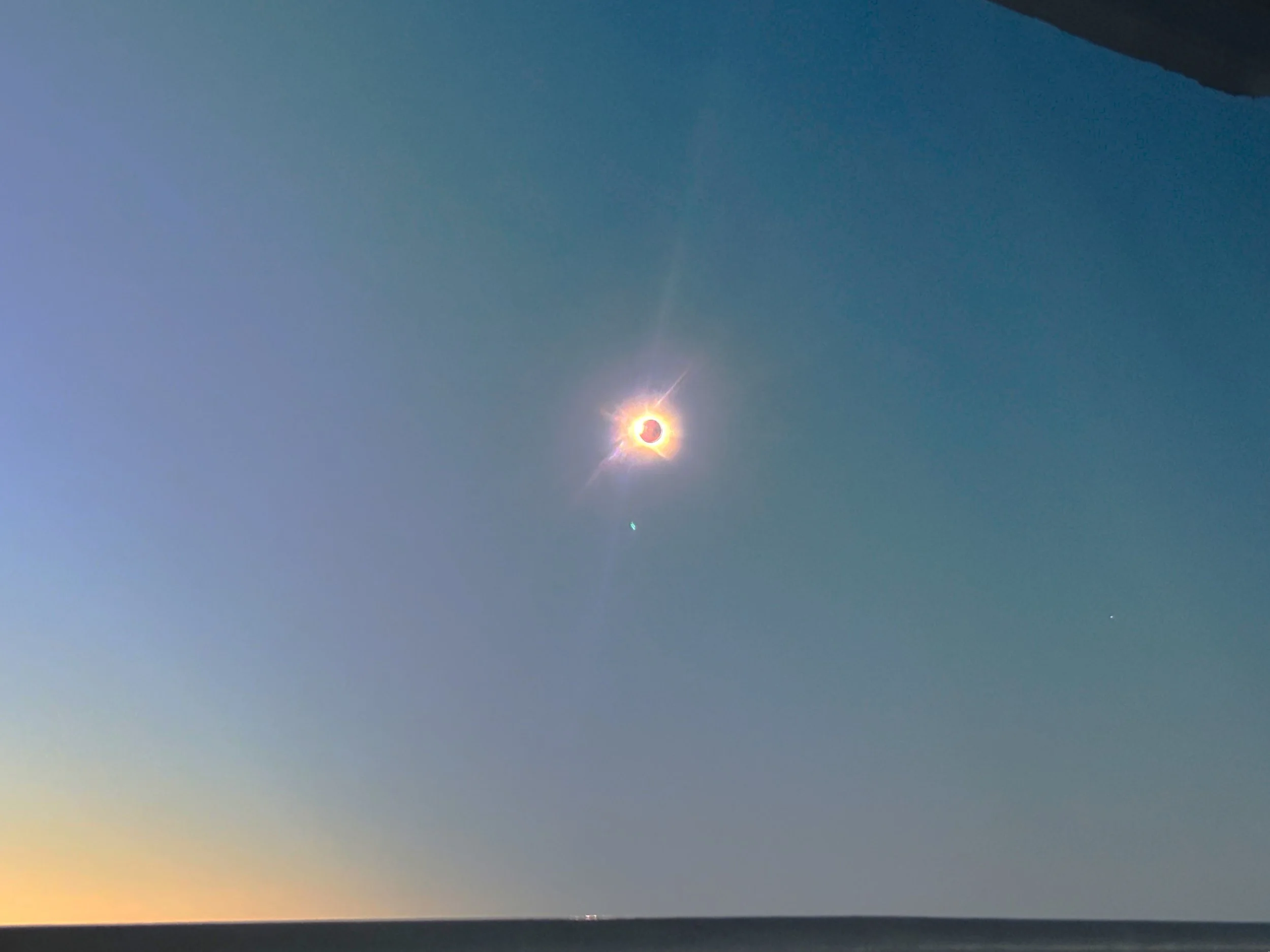
The near silence of the bridge was a third and, once again, profoundly different way to experience a total solar eclipse. I’d also never seen one out at sea before. All around us, the horizon glowed with the yellows of sunset. To our side, the sun’s corona glowed silver against the black sky, in angelic, delicate tendrils that reminded me of a close-up look at feathers. We’d only have a few minutes of totality, and I focused, watched, and drank it in. No photos or moving images can ever capture the ring of light like the human eye.
To my relief, we saw all the things I described in my talks. There was a huge cheer again as, after a few minutes, the eclipse ended with a bright beam of light around the edge of the moon. In the instant before, I saw the wave of light race at thousands of miles across the ocean as the temporary night ended.
I made one more announcement, asking our guests to thank the crew for all the hard work they’d done to make this incredible experience possible. The third, last, and biggest cheer shook its way through the ship.
It was time for me to join the guests and celebrate.
I’m already assigned to two more eclipse voyages.