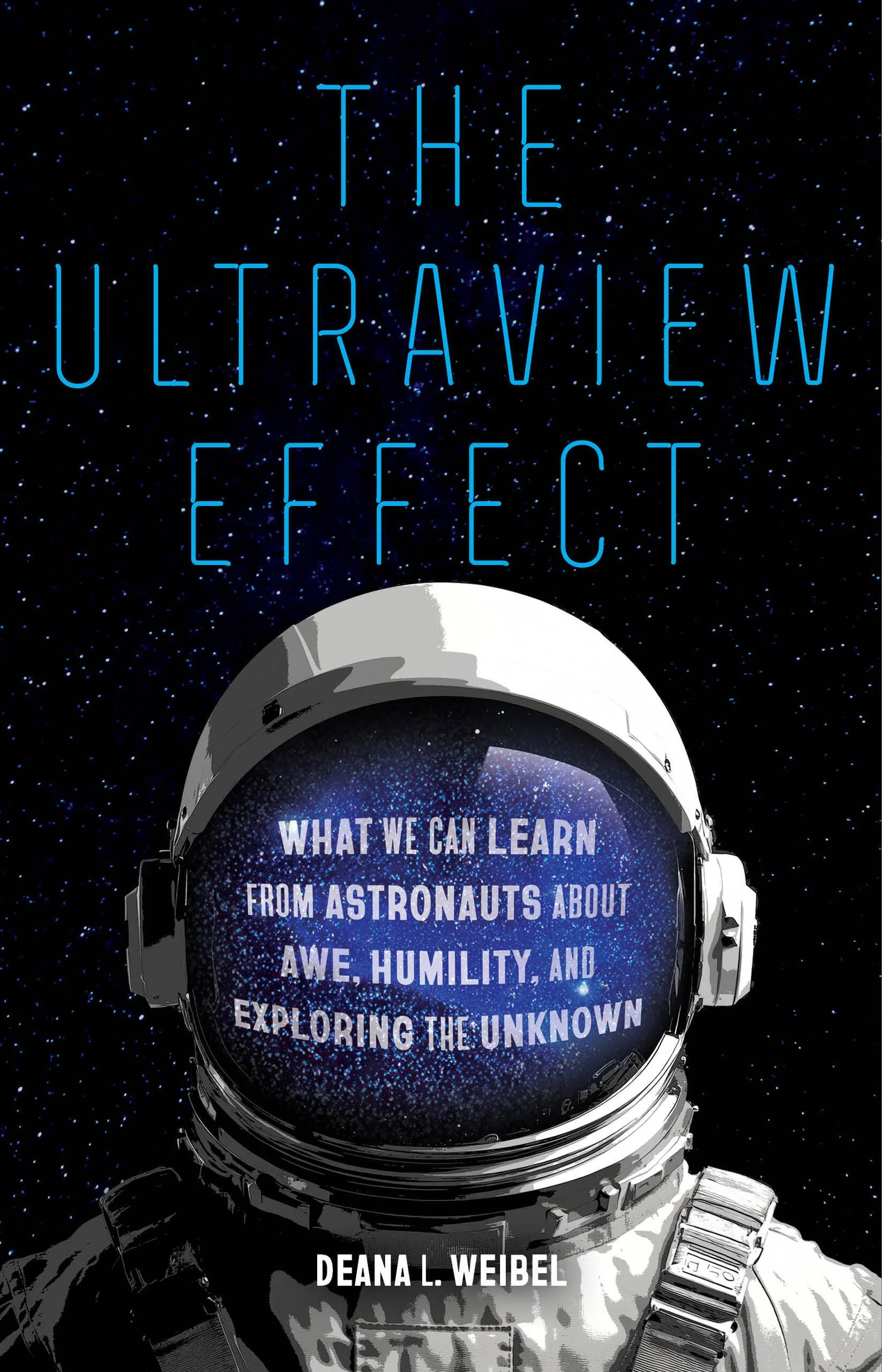
The Ultraview Effect
/This book reminds me why I first became interested in space... not so much to look down, but to look out.
I’ve been fortunate enough to work with a number of spacefarers and help them describe what it is to look down at the majesty of our ever-changing planet from Earth orbit. But for me it’s only ever been a beginning. There’s almost always that moment in a science fiction movie when the music swells and the attention shifts outward. To beyond. To the unknown. That’s what used to grab me most. It still does.
Deana Weibel has been writing around subjects such as this for a while, and her work is always illuminating. She often compares the human space experience to one of religious pilgrimage, and I can understand the commonalities even if I have not personally experienced them. In this book, she perfectly describes how awe is often the gateway to changing our perspective. She chronicles the humility that often comes with awe. And why have new experiences if we are not open to change and humbling ourselves before them? Every day, we can try and understand something new, while remaining awed at wonders we have yet to know. It’s very Zen. It’s very healthy. And you don't have to travel into space to examine ideas that might contradict your existing beliefs. But clearly it doesn’t hurt to do so.
Weibel sets out to include astronauts from as large a variety of genders and ethnicities as possible, while noting the spacefaring community is still not particularly diverse. She also weaves a long history of awe going through human history, reaching back long before the spacefarers. She tells stories I’ve never heard before, such as the astronaut who kept a large, light-blocking camera hood around them while passing over the dark side of Earth. With no moonlight either, their view out into the universe was uninterrupted. It sounds spine-tingling.
When I assisted Apollo 15 astronaut Al Worden with his memoir Falling To Earth, I was most enchanted by the chapters where he described orbiting the moon for days, totally alone. He gazed out at the Milky Way, with all other light blocked, aware that he didn’t understand what he was looking at. Yet, as the first human to do so with complete clarity, he knew he was the beginning of something that would make sense thousands of years later. Can you imagine?
I think it is the most important thing I have ever worked on, and perhaps ever will. This book helped me remember why.